




The short answer: it depends on your lawn size and terrain complexity. Budget robot mowers under $1000 handle basic flat lawns up to 0.40 acres with standard features, while $2000+ models like Lymow One Plus are designed to tackle larger properties (up to 1.73 acres per day), steep slopes up to 45 degrees, and complex layouts using wire-free navigation and advanced obstacle avoidance.
For homeowners with challenging terrain, multiple zones, or lawns exceeding 0.50 acres, the premium tier delivers measurable time savings. It eliminates the need for physical wire installation—often justifying the higher upfront investment within 2-3 years.
Key Differences Between Budget and Premium Robot Mowers
Premium robot mowers are built for more demanding lawns. The price gap usually reflects improvements in navigation accuracy, terrain capability, cutting power, daily coverage, obstacle detection, and installation flexibility.
Most robot mowers in the $799–$1400 range use RTK-GPS combined with basic vision sensors. These systems perform well on simple lawns but are typically restricted to smaller areas (0.10–0.50 acres) and slopes below 45% (24°).
Premium mowers like Lymow One Plus leverage upgraded hardware—Including upgraded dual rotary blades powered by 1785W cutting motors, delivering up to 2.8× greater peak power efficiency than the previous generation (measured at the motor’s optimal efficiency point, excluding real-world current limiting).
The system also features a more rugged and powerful track design, enabling coverage of up to 1.73 acres and slope climbing capability of up to 45°. In addition, the navigation and obstacle-avoidance system has been significantly upgraded, trained on thousands of object scenarios to improve detection accuracy and operational reliability.
Source: https://www.cnet.com/home/yard-and-outdoors/best-robot-lawn-mowers/
*More Lymow One Plus Details YouTube Video
*More Lymow One Plus Details YouTube Video
| Feature | $1000 Models | $2000+ Models (e.g., Lymow One Plus) |
| Lawn Coverage | 0.125-0.50 acres | Up to 1.73 acres/day |
| Slope Capability | below 45% (24°) | 100% (45°) |
| Navigation | RTK-GPS + Basic Vision | RTK-VSLAM + AI Vision |
| Obstacle Clearance | 1.5-2 inches | 2.8 inches (7cm) |
| Battery Cycles | 500 - 1,000 charges (Li-ion) | 2000 cycles (LiFePO4) |
| Zone Management | 5-20 zones | 80+ zones |
Cutting Power and Efficiency Analysis
Cutting power plays a major role in how well a robot mower handles thick or overgrown grass. Budget models deploy 400-800W cutting systems adequate for maintained lawns with weekly mowing schedules. Premium cutting systems that Lymow One Plus paired, can handle overgrown grass, thick spring growth, and dense turf varieties without speed reduction.
Efficiency is further compounded by deck width. A 16-inch dual-blade deck covers significantly more area per pass than the 7-8 inch decks standard on budget models, reducing total mowing time and battery strain. Additionally, premium SK5 High-Carbon Steel blades maintain sharpness 2-3x longer than standard steel, extending replacement intervals from every 3 months to up to a full year. You can also set the cutting height from 1.2 to 4 inches.

Slope Handling: Where Premium Models Excel
Steep terrain separates capable mowers from struggling ones. Budget models specify 30-45% slope capability, which is adequate for gentle rolling lawns. Premium tracked models like Lymow One Plus achieve 100% grade capability (45 degrees) through high-torque hub motors and reinforced track systems.
Homeowners with backyard slopes exceeding 30 degrees often find that wheeled budget mowers lose traction or leave uncut patches. Tracked systems maintain consistent cutting speed and blade engagement on inclines, preventing the "scalping" common when underpowered mowers struggle uphill. Tracked designs also distribute weight across a larger surface area, reducing turf damage and improving cutting performance.
Coverage Capacity and Multi-Zone Management
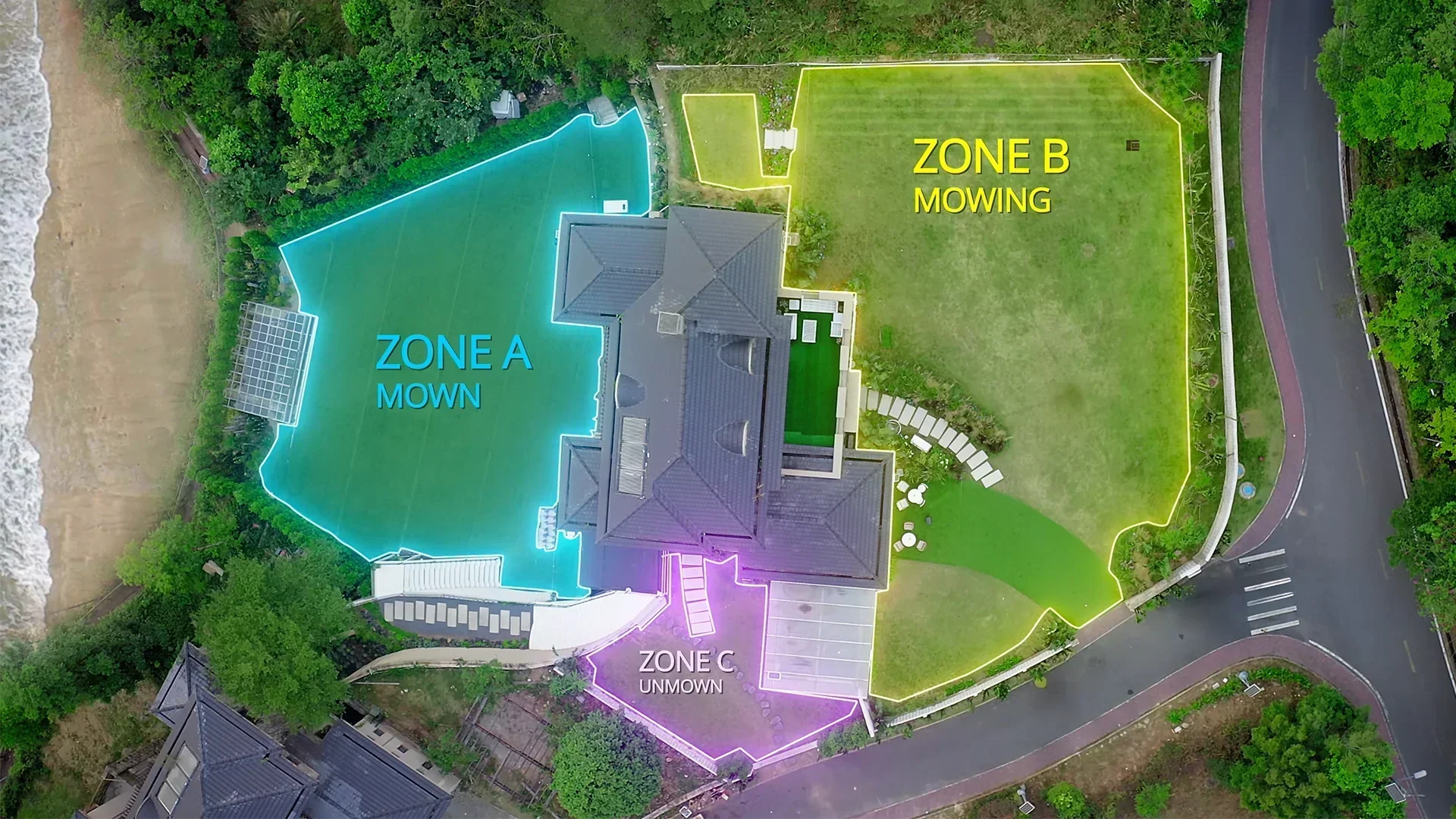
Lawn size determines whether budget models suffice. For simple rectangular plots under 0.25 acres, budget models offer excellent value. However, properties above 0.3 acres with separated yards require the granular management found in premium systems. Lymow’s 80+ zone capacity matches this demand.
Wire-Free Navigation: The Game-Changing Advantage
A major advancement in modern robotic mowers is the transition to wireless operation. Traditional systems require burying perimeter cables, a process that can take several hours and costs $500–$800 if professionally installed.
While both budget and premium 2026 models now feature wireless options through RTK-GPS and vision-based mapping, premium choices often add 4G LTE connectivity and advanced sensor fusion (RTK + VSLAM). This enables reliable mapping of complex properties with separated zones, narrow passages, and irregular boundaries that might otherwise suffer from "GPS-dark" spots under thick foliage or near buildings.
Setup time comparison: Budget models require 45-90 minutes for initial mapping of simple lawns. Premium systems complete complex multi-zone mapping in similar timeframes but deliver superior boundary accuracy and automatic path optimization across disconnected areas using virtual channels.
Smart Features and Connectivity
Connectivity differentiates the reliability of remote monitoring. Budget models usually support Bluetooth and 2.4GHz Wi-Fi. Premium options add 5GHz Wi-Fi and 4G LTE, enabling real-time alerts and control from anywhere—essential for vacation properties or receiving maintenance updates when away from home.
AI vision capabilities also vary. Budget systems detect simple obstacles like trees or furniture. Premium systems utilize visual semantics to recognize up to thousands of different objects, including pets and small garden decorations, reducing the false stops that interrupt mowing sessions.
Long-Term Cost Analysis and ROI
Upfront price differences narrow when calculating 5-year ownership costs. Consider a 0.4-acre property with moderate slopes:
Budget Model ($1200):- Wire installation (DIY): $0 (wire-free)
- Annual blade replacements: $60 x 5 = $300
- Battery replacement (year 3): $250
- Time saved vs. manual mowing: 35 hours/year x 5 = 175 hours
- Total 5-year cost: $1750
Premium Model ($2499 - Lymow presale pricing):
- Wire installation: $0 (wire-free)
- Annual blade replacements: $80 x 5 = $400
- Battery replacement: $0 (2000-cycle LiFePO4 battery lasts 6+ years)
- Time saved vs. manual mowing: 40 hours/year x 5 = 200 hours - Additional time saved from reduced stuck incidents/manual intervention: 15 hours (over 5 years)
- Total 5-year cost: $2899
When to Choose Budget vs Premium
Stick with budget models ($600-$1000) if you have:
- Flat or gently rolling lawns under 0.25 acres.
- Simple layouts without separated zones.
- Maintained grass with regular mowing schedules.
Upgrade to premium models ($2000+) like Lymow if you have:
- Properties exceeding 0.4 acres require daily high-efficiency mowing.
- Slopes above 25 degrees or uneven terrain.
- Multiple separated zones requiring virtual channel navigation.
- A desire for the lowest possible maintenance (IPX6 waterproof) and maximum automation.
Frequently Asked Questions
Q: Do wire-free mowers work as reliably as boundary wire systems?
A: Modern RTK-GPS and vision-based systems match boundary wire reliability while eliminating installation labour. Premium models with 4G connectivity and sensor fusion maintain accuracy even under heavy tree cover.
A: Modern RTK-GPS and vision-based systems match boundary wire reliability while eliminating installation labour. Premium models with 4G connectivity and sensor fusion maintain accuracy even under heavy tree cover.
Q: Can robot mowers handle thick spring grass?
A: Budget models (400-800W) may struggle with grass exceeding 4-5 inches. Lymow One Plus's premium systems with strong cutting power and high-torque cutting motors can handle growth up to 4 inches in a single pass.
A: Budget models (400-800W) may struggle with grass exceeding 4-5 inches. Lymow One Plus's premium systems with strong cutting power and high-torque cutting motors can handle growth up to 4 inches in a single pass.
Q: What happens if my yard has multiple separated areas?
A: Budget systems often require manual transport between disconnected zones. Premium models like Lymow create virtual channels across driveways, enabling the mower to travel autonomously between front, back, and side yards.
A: Budget systems often require manual transport between disconnected zones. Premium models like Lymow create virtual channels across driveways, enabling the mower to travel autonomously between front, back, and side yards.


Leave a comment
This site is protected by hCaptcha and the hCaptcha Privacy Policy and Terms of Service apply.